








Regular Commentary/Analysis for...

People Magazine
Fox News
Variety
Good Morning America
HuffPost
The Wrap
Hollywood Life
OK! Magazine
ABC News
Divorce Magazine
Us Weekly
Associated Press
Super Lawyers

Where Family Law and Psychology Intersect

Karen Buscemi, an author and columnist who writes about family relationships, talks no-nonsense strategies on co-parenting with a difficult ex. While she tells Host Glass about how flexibility can work for the better (for everyone involved), she is quick to lay out some ground rules for not becoming a doormat. Her lessons are curated from both her books, Split in Two: Keeping it Together When Your Parents Live Apart, a tutorial aimed mostly at teens to help them adapt to living in two different households, and I Do, Part 2: How to Survive Divorce, Co-Parent With Your Kids, and Blend Your Families. The latter self-help book is devoted to teaching the reader how to keep the peace, and stay out of contentious battles with an impossible ex. As the conversation shifts from “what’s best for the kids,” to “how not to become a doormat,” for starters, Buscemi begins to tick off her laundry list of ways to communicate with an ex. How a parent interacts with a difficult former intimate partner is key to keeping one’s dignity, making reasonable concessions (when appropriate for scheduling), and also laying down some reasonable ground rules, courteously. Host Glass chimes in with one of his gold-star admonishments for warring exes when it comes to the kids and thinking sensibly: “Do you want to be right? Or do you want to be happy?” Glass quips. It’s a good question to ask, according to Buscemi, who agrees as she explains that when co-parents become defiant or uncooperative, the root cause is often to maintain control of the other parent, the one who is still holding on to grudges.

Author/Columnist, Karen Buscemi, shares invaluable advice on the “how-to’s” and “don’t do’s” when co-parenting with an annoying ex.

In a prior Episode with author and life coach, Darlene Taylor, who shared sage advice from her book, It’s Not About Us: A Co-parenting Guide to Taking the High Road. Glass’ blog entry listed appropriate guidelines for the “good” parent to follow in co-parenting. In this Episode, Glass’s blog entry handles the opposite—the “bad” parent. He carefully spells out ways to deal with that person to keep the co-parenting communication and scheduling civil and “professional.”

During his 30-year career, Glass has taken a compassionate view when it comes to the children of a divorcing couple. His initial question is often “Do you have children?” He is immediate in gathering that information and making his client mindful of the effects of their divorce on the kids. Co-parenting dos and don’ts chief among them. While the parents may move on, the kids will likely be involved with both parents indefinitely. Glass makes it clear, bad co-parenting of the children can cause trauma for them that may last a lifetime. “Kid’s first” is Host Glass’s mandate. If you’re dealing with a difficult ex, you may want to print out this list and keep it handy, just in case you need a reminder now and again.

In a prior Episode with author and life coach, Darlene Taylor, who shared sage advice from her book, It’s Not About Us: A Co-parenting Guide to Taking the High Road. Glass’ blog entry listed appropriate guidelines for the “good” parent to follow in co-parenting. In this Episode, Glass’s blog entry handles the opposite—the “bad” parent. He carefully spells out ways to deal with that person to keep the co-parenting communication and scheduling civil and “professional.”

During his 30-year career, Glass has taken a compassionate view when it comes to the children of a divorcing couple. His initial question is often “Do you have children?” He is immediate in gathering that information and making his client mindful of the effects of their divorce on the kids. Co-parenting dos and don’ts chief among them. While the parents may move on, the kids will likely be involved with both parents indefinitely. Glass makes it clear, bad co-parenting of the children can cause trauma for them that may last a lifetime. “Kid’s first” is Host Glass’s mandate. If you’re dealing with a difficult ex, you may want to print out this list and keep it handy, just in case you need a reminder now and again.

Read current blog entry →

BreakingGLASS

Tune in to TheHourGLASSpodcast where David Glass will soon discuss the Clancy case and the troublesome issues surrounding families and postpartum.

Glass on the Clancy case — watch on YouTube

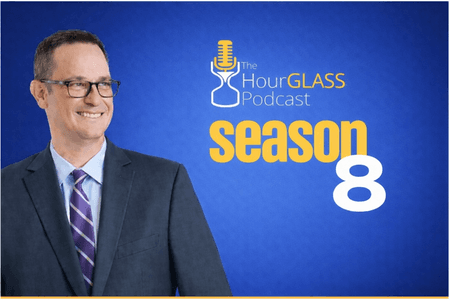
This new Episode skates smoothly on the heels of our how-to’s of co-parenting lessons from Episode 9 of Season 8 when Darlene Taylor shared her fifteen pearls of wisdom for forging a collaborative co-parenting approach with your ex. In this interview with Karen Buscemi (Episode 10), author and columnist who writes about divorce/relationship/family issues, Host Glass’s questions her about what to do and not do when dealing with an uncooperative ex in the co-parenting department. Buscemi touts flexibility as a strategy, yes, but not at the expense of losing one’s self-esteem or becoming a doormat. Incisive and wise, she talks about how any kind of parental discord reflects on the kids. She culls a lot of the content from her books, Split in Two: Keeping It Together When Your Parents Live Apart (written primarily for teens forced to adjust to life in two households) and I Do, Part 2: How to Survive Divorce, Co-Parent With Your Kids, and Blend Families. Both self-help books have a treasure-trove of advice. Glass’s theme this season has covered other related parenting topics such as: Enmeshment, defined in part by Dr. Kenneth Adams (Episode 8) who describes it as a dysfunctional dynamic—when the parent leans on the child to become the surrogate “intimate partner,” by making their child feel responsible for their emotional and often physical well-being; Parental Alienation, (Episodes 1 and 7), featuring two dads whose stories seem unreal, but they’re not. They’re true. And, Domestic Violence, giving TheHourGLASSpodcast fans a thorough understanding of what constitutes it. Domestic Violence (Episode 3) with guest, Alesia Litteral, whose husband nearly killed her, is one of the best in Season 8. (Episodes 4 and 5) Mark Geragos and Matt Murphy, well known for their work on the Domestic Violence crime front, provided insight into red flags for would-be victims. Our viewers also learned it is not always physical, mental, and emotional “violence,” it can include a host of offenses like “mind games,” says California Sen. Susan Rubio (District 22) (Episode 6). In fact, Dr. Adams and Host Glass veered into an earnest conversation about this very topic. Adams (Episode 9) clearly defined enmeshment as a hugely dysfunctional family dynamic: one that can consume a parent (and bespeaks of child abuse). Very often. parents are unaware they are committing this more subtle type of child cruelty. Coming up in Season 8 Episode 11, is a discussion on the impact of adult children when they are faced with their parents’ “Gray Divorce.” Author, researcher, therapist, and expert, Linda Hershman, featured in the New York Times, and author of Gray Divorce: Everything You Need to Know About Later-Life Breakups, explains it all in easy-to-understand talking points; especially when Host Glass asks how it impacts the couple’s adult children, even after they are grown.

In case you need to catch up, binge earlier Prior Seasons/Episodes where you can choose from more than 200-plus interviews and a slew of topics on breakups. (Links are on the landing page). More compelling guests and Episodes are on their way when in Season 9, Glass kicks off the new year with an intriguing conversation with Karis Nafte, MFLT, who is revered as one of the world's most knowledgeable experts on the effects of a breakup on a couple's pets.

Please subscribe to TheHourGLASSpodcast and write to Host Glass and the production team with an email request for a guest appearance or topics you would like Glass to cover. Thehourglasspod@gmail.com.

Whether this is your first episode or you have been with us from the beginning, explore Seasons 1 through 8 below and discover conversations that matter.

Prior Seasons/Episodes

Disclaimer: The views and opinions expressed by guests are their own and do not necessarily reflect the official policy or position of TheHourGLASS Podcast.